Introduction
Wearable fitness technology has gradually moved beyond simple step counting. Modern devices can collect information throughout the day and night, allowing users to look at patterns involving sleep, physical activity, recovery, heart rate, stress, and other aspects of daily wellness. The WHOOP 5.0/MG Activity Tracker with a 12-month membership is designed around this type of continuous monitoring.
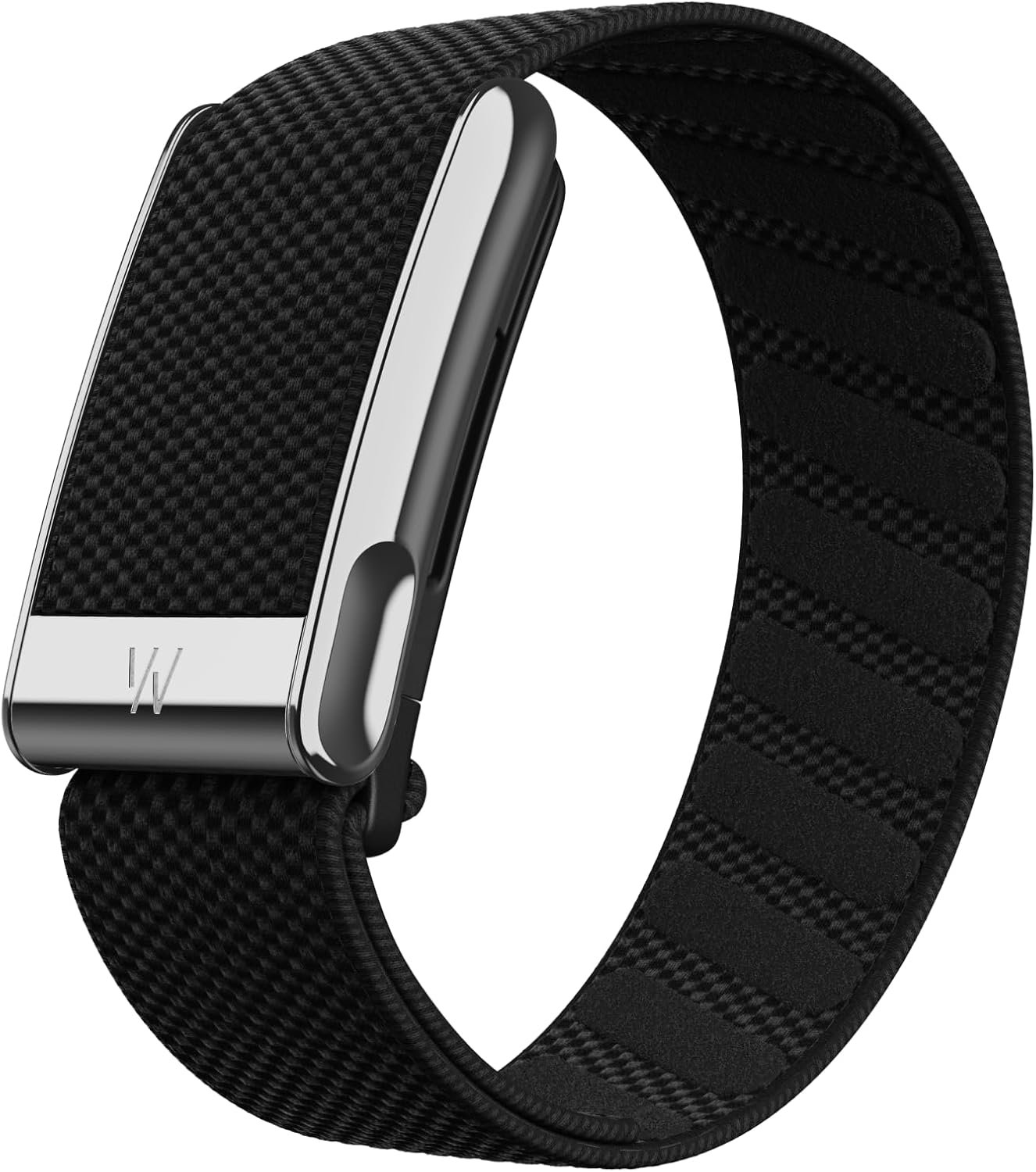
The product associated with ASIN B0DY2PB7RB is the WHOOP Life package, which includes the WHOOP MG device, a SuperKnit Luxe band, a waterproof Wireless PowerPack, and a 12-month WHOOP Life membership. WHOOP’s current product information identifies the MG as the hardware used with the Life membership, while the 5.0 is used with other membership tiers.
Unlike a traditional smartwatch, WHOOP is built around continuous health and fitness tracking rather than a conventional on-device display. The company’s current membership information emphasizes 24/7 insights, sleep, strain, recovery, personalized coaching, activity monitoring, women’s hormonal insights, and other health-oriented features.
The WHOOP MG version also adds features that distinguish it from the standard WHOOP 5.0 configuration, including an ECG-based Heart Screener and blood pressure insights. WHOOP describes these as wellness and health-monitoring features, with availability varying by location and applicable regulatory requirements.
This makes the device relevant to several different types of users, from people who want to understand their sleep patterns to athletes interested in training load and recovery. At the same time, the amount of information available can make the platform more involved than a basic activity tracker.
This guide explains what the WHOOP 5.0/MG package offers, how its tracking approach works, what the membership contributes, and what users should consider before incorporating a continuous wearable into their daily routine.
Understanding the WHOOP 5.0 and WHOOP MG
It is useful to clarify the relationship between the names WHOOP 5.0 and WHOOP MG.
WHOOP introduced the 5.0 and MG generations in 2025. Both devices use the company’s newer hardware platform and were designed around continuous wear, a smaller form factor, and substantially longer battery life than earlier generations. WHOOP states that the new devices are approximately 7% smaller and use updated sensors and processing hardware.
The main distinction is the membership and feature level associated with the hardware.
WHOOP’s current lineup places WHOOP 5.0 with the One and Peak memberships, while WHOOP MG is associated with the Life membership. The Life package adds features such as Heart Screener with ECG readings, on-demand AFib detection where available, and blood pressure insights for wellness.
The Amazon product identified in this guide is therefore more specifically associated with the WHOOP MG and WHOOP Life package rather than simply being a generic WHOOP 5.0 activity tracker.
What Is Included in the 12-Month Package?
The package is structured as both hardware and membership rather than as a standalone wearable.
According to WHOOP’s current Life membership information, the package includes:
- WHOOP MG hardware
- A SuperKnit Luxe band
- A Waterproof Wireless PowerPack
- A 12-month WHOOP Life membership
- Access to the features associated with the Life tier during the applicable membership period
This distinction is important because the WHOOP experience depends heavily on its membership platform. The device collects physiological information, while the app and membership ecosystem turn that information into scores, trends, reports, and coaching-oriented insights.
The product should therefore be understood as a connected wearable service rather than simply a piece of wrist hardware.
Key Features
24/7 Activity and Health Tracking
Continuous monitoring is one of the central ideas behind WHOOP.
Instead of asking users to manually start every measurement, the device is designed to remain on the body throughout the day and night. This allows the platform to build a longer-term picture from data collected across different situations, including sleep, exercise, rest, and ordinary daily activity.
WHOOP describes its platform as providing 24/7 insights across areas such as sleep, strain, stress, and heart health.
The benefit of continuous collection is not necessarily a single measurement. The more useful concept is the ability to observe patterns over time.
For example, a user may compare how sleep duration relates to training, how demanding workouts influence recovery, or how changes in daily routines correspond with physiological trends.
Sleep Tracking
Sleep is a major part of the WHOOP ecosystem.
The platform tracks sleep-related information and produces sleep-oriented insights intended to help users understand their nightly recovery. WHOOP’s current membership materials include Sleep Performance and Sleep Score features as part of the broader sleep experience.
A continuous wearable can be particularly useful for sleep tracking because it can collect information while the user is asleep without requiring a traditional watch-style screen.
Over time, the resulting data can be used to examine patterns rather than focusing on a single night’s result.
For example, a user could look at differences between:
- Short and long sleep periods
- Regular and irregular bedtimes
- Training days and rest days
- Different recovery patterns
- Changes in daily routines
- Sleep consistency over longer periods
These patterns can provide context that a simple sleep-duration number cannot provide by itself.
Strain and Activity Monitoring
WHOOP uses the concept of “Strain” to describe physiological demand associated with activity.
This approach is different from simply counting steps or recording workout duration. The system is intended to provide a broader view of how demanding activity is relative to the individual’s physiological response.
WHOOP’s current membership information also lists activity monitoring, steps, VO₂ Max, and heart-rate zones among its fitness features.
This can be useful for people who participate in different forms of exercise because the system is not limited to one type of workout.
The company states that its newer platform supports more than 145 activities, while its fitness features include measurements such as VO₂ Max and heart-rate zones.
Recovery Insights
Recovery is another central component of the WHOOP experience.
Rather than evaluating exercise in isolation, WHOOP combines activity and sleep information with physiological measurements to produce recovery-oriented insights.
This creates a different way of thinking about training.
Instead of simply asking, “How much did I exercise today?” a user can also consider whether the body appears prepared for additional physical demand.
That distinction can be useful for athletes, recreational exercisers, and people establishing a new training routine.
Recovery information should still be treated as guidance rather than a definitive medical assessment. A wearable’s calculated score is not a substitute for professional medical evaluation when symptoms or health concerns are present.
Personalized Coaching
WHOOP includes personalized coaching as part of its membership experience.
The purpose of coaching is to translate collected data into practical suggestions rather than leaving the user with a dashboard full of numbers.
WHOOP describes its membership platform as combining health insights with personalized coaching to help users build habits around sleep, training, recovery, and related behaviors.
The usefulness of this approach depends partly on how consistently a person wears the device and interacts with the information.
Someone who reviews trends and adjusts routines based on the information may get more practical value from the coaching experience than someone who rarely checks the application.
Women’s Hormonal Insights
The platform also includes Women’s Hormonal Insights.
WHOOP describes this feature as providing information about how hormonal changes may relate to areas such as recovery, sleep, stress, and performance. The company states that the system is designed to provide insights across different stages and situations, including menstruation, pregnancy, and perimenopause.
This type of feature is best understood as a tracking and educational tool rather than a diagnostic system.
Menstrual-cycle information can vary considerably between individuals, and wearable-derived insights should not be interpreted as medical diagnosis or as a replacement for professional healthcare.
VO₂ Max and Heart Rate Zones
WHOOP’s current membership lineup includes VO₂ Max and heart-rate-zone features.
VO₂ Max is commonly used as an indicator related to aerobic fitness. Heart-rate zones, meanwhile, can help users organize workouts around different levels of cardiovascular intensity.
For someone following a structured training program, these metrics can provide another way to evaluate exercise sessions.
They can also be useful when comparing training patterns over time rather than focusing only on individual workout statistics.
14+ Day Battery Life
Battery life is particularly important for a wearable intended to be worn continuously.
WHOOP states that the 5.0 and MG devices offer 14+ days of battery life.
Longer battery life can reduce the frequency with which the device needs to be removed from the wrist.
The included Wireless PowerPack is designed to make charging more convenient while the wearable remains part of the user’s routine. WHOOP’s Life package specifically lists a waterproof Wireless PowerPack as part of the included equipment.
Actual battery performance can vary depending on use and operating conditions, so “14+ days” should be understood as the manufacturer’s stated battery-life figure rather than a guarantee of identical performance for every user.
WHOOP MG Health Features
The MG version adds features that deserve separate attention because they involve health-related measurements.
Heart Screener With ECG
WHOOP’s Heart Screener allows users to take an on-demand ECG reading using the MG device.
WHOOP states that the feature can detect potential signs of atrial fibrillation and that it is FDA-cleared for its intended use.
This does not mean that the device should be treated as a replacement for professional cardiac evaluation.
The Amazon listing also includes regulatory and regional limitations. For example, certain heart-rhythm features may not be available in every region or for every user category.
Users should therefore check current regional availability and applicable eligibility requirements rather than assuming every advertised feature is accessible everywhere.
Blood Pressure Insights
WHOOP MG also provides Blood Pressure Insights.
WHOOP describes the feature as providing estimated systolic and diastolic blood pressure ranges and presenting them as wellness-oriented information.
This feature deserves careful interpretation.
A blood-pressure insight generated by a wearable should not automatically be treated as equivalent to a clinical blood-pressure measurement. WHOOP itself describes Blood Pressure Insights as a wellness feature and has discussed regulatory considerations surrounding the feature.
Anyone concerned about high or low blood pressure should use an appropriate medical measurement method and consult a qualified healthcare professional.
How It Can Be Used
Building a Consistent Sleep Routine
One practical use is observing sleep patterns over several weeks.
Instead of looking at one night’s sleep score, users can examine whether their sleep tends to change when they alter bedtime, wake time, exercise schedules, caffeine habits, travel routines, or other daily behaviors.
The goal is not to chase a perfect number every morning. It is to identify patterns that may help create a more consistent routine.
Structuring Training
Athletes and recreational exercisers can use activity and recovery information when planning training.
For example, someone following a running program might monitor how demanding sessions affect recovery and then compare that information with subsequent workouts.
Similarly, a person beginning strength training can use activity data to observe how training volume changes over time.
The wearable does not replace a qualified coach or individualized training plan, but it can provide additional information to consider.
Understanding Daily Stress Patterns
WHOOP also provides stress-related information through its broader monitoring ecosystem.
WHOOP’s Peak membership, for example, includes a Real-time Stress Monitor, while the broader platform tracks physiological information related to stress and recovery.
This can help users explore whether particular situations consistently correspond with changes in their physiological measurements.
Stress measurements should be interpreted as physiological signals rather than direct measurements of emotions. A wearable cannot know exactly why a particular physiological response occurred.
Monitoring Activity Outside the Gym
Continuous activity tracking is not limited to formal workouts.
Walking, household activities, recreational movement, commuting, and other forms of physical activity can contribute to the overall picture.
This is particularly relevant for people whose daily movement is more varied than a traditional exercise schedule.
Tracking Long-Term Trends
One of the strongest conceptual uses of a continuous wearable is trend analysis.
A single day can be unusual for many reasons. Travel, illness, late nights, unusual exercise, work schedules, or social activities can all change physiological measurements.
Longer-term data can provide more context.
Users can compare weeks or months rather than treating every daily score as an independent judgment.
Who It May Be Suitable For
Fitness Enthusiasts
People who train regularly may appreciate having sleep, activity, strain, recovery, and heart-rate information in one ecosystem.
The system can be particularly relevant for users who want to connect training decisions with recovery patterns.
Athletes
Athletes with structured training schedules may use physiological data to complement their existing training process.
It can be useful for observing trends during training blocks, recovery periods, travel, or changes in workload.
However, coaches and athletes should still consider performance data, subjective feedback, training history, and sport-specific requirements rather than relying on a single wearable metric.
People Interested in Sleep
Users whose primary interest is sleep may find the continuous-wear approach appealing.
The absence of a traditional screen can also make the device feel less like a miniature smartphone on the wrist.
Users Interested in Long-Term Health Trends
The broader WHOOP ecosystem includes Healthspan and other long-term wellness features on eligible memberships. WHOOP describes Healthspan as using multiple metrics to calculate WHOOP Age and Pace of Aging.
These features are intended for wellness and informational purposes rather than medical diagnosis.
People Interested in Menstrual-Cycle Tracking
Women’s Hormonal Insights may be relevant to users who want to explore relationships between cycle-related changes and sleep, recovery, stress, or performance.
Again, the information should be considered one source of context rather than a replacement for medical care.
Important Things to Consider
The Membership Is an Important Part of the Product
One of the biggest differences between WHOOP and many conventional fitness trackers is the role of the membership.
The device and app are designed as an integrated service. The 12-month package therefore needs to be considered as a membership-based wearable rather than simply a hardware purchase.
Before the included membership period ends, users should check the then-current renewal terms and membership options if they intend to continue using the platform.
There Is No Traditional Watch Screen
WHOOP is intentionally designed without a conventional display.
WHOOP describes the device as having “zero distractions,” with no screen and no buzzing competing for attention.
This can be useful for someone who wants a dedicated health and fitness tracker rather than another smartwatch.
However, someone who wants notifications, maps, music controls, calls, or on-wrist apps may prefer a different type of wearable.
Data Requires Interpretation
A large amount of data does not automatically produce better decisions.
Heart rate, HRV, sleep measurements, strain, recovery scores, and other metrics are estimates or calculated indicators based on sensor data and algorithms.
They can be useful for identifying patterns, but they should not be interpreted as perfect measurements of overall health.
Health Features Have Limitations
The MG’s ECG and blood-pressure-related features require particular attention.
WHOOP states that some features are regulated and may not be available in every region. The Amazon listing also notes that WHOOP is not a medical device and should not be used to diagnose, treat, cure, mitigate, or prevent disease.
This is an important distinction for anyone purchasing the device specifically because of a medical concern.
Continuous Wear May Not Suit Everyone
The device is designed around continuous wear, including during sleep and exercise.
That means comfort becomes important.
Band fit, skin sensitivity, sweating, temperature, and personal preferences can all influence whether someone enjoys wearing a wrist device continuously.
If skin irritation develops, the device should be removed and the manufacturer’s guidance should be followed.
Waterproofing Has Specific Limits
WHOOP’s product information identifies the device as IP68 water-resistant up to 10 meters for up to two hours under the stated conditions.
Water resistance should not be interpreted as unlimited protection against every aquatic environment.
Users should follow the manufacturer’s current water-resistance guidance, especially when using the device in unusual conditions.
Comparing General Wearable Categories
WHOOP-Style Recovery Wearables
Recovery-oriented wearables generally emphasize sleep, physiological trends, training load, and recovery rather than smartphone features.
They can be useful for users who want a detailed wellness dashboard without needing a large screen on the wrist.
Traditional Fitness Bands
Fitness bands commonly focus on steps, heart rate, workouts, sleep, and basic notifications.
They can be simpler to operate and may have lower dependence on subscription services, depending on the manufacturer.
The tradeoff is that they may provide a different approach to recovery analysis and coaching.
Smartwatches
Smartwatches typically combine fitness tracking with broader digital functions.
They may include notifications, GPS, music controls, communication features, applications, and an on-device display.
For users who want a miniature smartphone experience on the wrist, this category may be more relevant than a screen-free wearable.
Smart Rings
Smart rings focus on compact, continuous wearable tracking.
They are often designed around sleep, heart rate, temperature, and general wellness information.
The primary difference is physical form rather than necessarily the type of information collected.
Dedicated Sports Watches
Sports watches are often designed around GPS, navigation, training metrics, workout controls, and outdoor activities.
Runners, cyclists, hikers, and other athletes may value these capabilities when they need real-time information during exercise.
WHOOP’s screen-free approach instead places more emphasis on collecting data continuously and reviewing it through the companion app.
Using WHOOP Data Responsibly
Wearable data can become overwhelming if every metric is treated as a target.
A more sustainable approach is to focus on a small number of meaningful questions.
For example:
- Am I getting enough consistent sleep?
- How does training affect my recovery?
- Is my activity level changing over time?
- Which routines seem to correspond with better recovery?
- How does travel affect my sleep?
- Do my training habits match my goals?
These questions can turn a large amount of information into something more practical.
It is also worth remembering that daily physiological measurements naturally fluctuate.
A lower recovery score on one day does not automatically mean something is wrong. Similarly, a high score does not guarantee that someone is healthy or ready for every physical challenge.
Context matters.
Frequently Asked Questions
What comes with the WHOOP Life package?
The product associated with this ASIN includes a 12-month WHOOP Life membership, WHOOP MG device, SuperKnit Luxe band, and waterproof Wireless PowerPack.
Is this the WHOOP 5.0 or WHOOP MG?
The specific ASIN B0DY2PB7RB is associated with the WHOOP Life package and MG hardware. WHOOP’s current membership structure associates WHOOP 5.0 with One and Peak, while the MG is associated with Life.
How long does the battery last?
WHOOP states that the WHOOP 5.0 and MG offer 14+ days of battery life. Actual performance can vary depending on usage and conditions.
Can WHOOP track sleep?
Yes. Sleep tracking and Sleep Performance are core parts of the WHOOP platform. The system is designed for continuous wear, including overnight.
Does WHOOP track workouts?
Yes. WHOOP supports activity monitoring across a broad range of activities and provides features such as Strain, heart-rate zones, and VO₂ Max on applicable memberships.
Does WHOOP track menstrual cycles?
WHOOP includes Women’s Hormonal Insights, which are designed to provide personalized information related to hormonal changes and their potential relationship with areas such as sleep, recovery, stress, and performance.
Does WHOOP MG have an ECG?
The MG version used with WHOOP Life includes the Heart Screener ECG feature. WHOOP states that the feature can be used for on-demand ECG readings and can detect potential signs of AFib within its intended use. Availability and eligibility can vary by region.
Does WHOOP MG measure blood pressure?
WHOOP MG includes Blood Pressure Insights. WHOOP describes these as wellness-oriented estimates of systolic and diastolic ranges rather than a replacement for clinical blood-pressure measurement.
Is WHOOP a medical device?
WHOOP states that its overall wearable is not a medical device and should not be used as a substitute for medical care. Certain individual features, such as the ECG functionality, are subject to medical-device regulation and regional availability.
Does WHOOP have a screen?
WHOOP is designed without a traditional screen. The company describes this as part of its distraction-free wearable approach.
Can WHOOP be worn while sleeping?
Yes. Continuous wear, including sleep tracking, is a central part of the platform. The extended battery life is intended to reduce interruptions to continuous use.
Is the Wireless PowerPack included?
The WHOOP Life package includes a Waterproof Wireless PowerPack according to WHOOP’s current Life membership information.
Does WHOOP require a smartphone?
The WHOOP experience is centered around its connected app and membership ecosystem. The device itself does not provide a conventional display for viewing detailed information, so users should expect to use the companion application for reviewing data and insights.
Is WHOOP suitable for someone who only wants step counting?
It can track steps, but the platform is designed for much more than step counting. Its broader focus includes sleep, strain, recovery, heart-rate information, coaching, activity tracking, and other health-oriented insights.
Can WHOOP replace a smartwatch?
Not in terms of functionality. WHOOP does not provide the same screen-based ecosystem associated with many smartwatches. Its design prioritizes continuous health and fitness monitoring rather than notifications, apps, navigation, or on-device interaction.
Conclusion
The WHOOP 5.0/MG Activity Tracker with a 12-month membership represents a different approach to wearable technology. Instead of functioning primarily as a small smartwatch, it is built around continuous physiological monitoring, sleep analysis, activity tracking, recovery insights, personalized coaching, and longer-term trends.
The specific WHOOP Life package associated with ASIN B0DY2PB7RB includes the MG device, SuperKnit Luxe band, Wireless PowerPack, and 12-month membership. The MG configuration adds features such as ECG-based Heart Screener and Blood Pressure Insights to the broader WHOOP ecosystem.
For fitness-focused users, continuous sleep and recovery tracking can provide additional context around training. For people interested in long-term wellness patterns, the platform offers tools for examining activity, stress, sleep, and other physiological trends. Women’s Hormonal Insights add another dimension for users interested in cycle-related patterns.
At the same time, the product requires a realistic understanding of what wearable data can and cannot tell you. Calculated scores and physiological estimates are useful sources of information, but they are not substitutes for professional medical assessment. Regional availability also matters for regulated features such as ECG and certain heart-related functions.
The membership structure is another important part of the decision. WHOOP is designed as an integrated hardware-and-service ecosystem, so prospective users should consider not only the device itself but also how they intend to use the app, interpret the information, and continue their membership after the included 12-month period.
For someone looking for a screen-free wearable centered on continuous activity, sleep, recovery, coaching, and broader health insights, understanding these characteristics is a useful starting point.